Industry
Part of Miniature kit makers companies: fit, instructions and battery safety
An honest review of miniature kit makers
Named miniature kit makers reviewed on what they publish, who they suit and where they fall short, plus the checks that separate a good kit from a pretty box.
What to take away
- These miniature kit makers are judged on published plans, part fit and instruction quality, not on finished photos.
- The named makers below include Greenleaf, Real Good Toys, Robotime, Cutebee and Hands Craft.
- Scale is the first filter. A 1:24 kit and a 1:12 kit need different tools, glues and lighting.
- Ask for the cut file format before you buy. A kit with no vector file cannot be repaired or re-cut.
- Instruction writing is the weakest part of most kits, and the easiest thing to check before purchase.
- Landed cost from a UK maker includes CBP duty and sales tax, so compare delivered totals, not list prices.
What to check before you buy
- Scale stated as a ratio, not as "large" or "detailed"
- Cut file supplied in SVG, DXF or PDF at 1:1
- Material named, with thickness in millimeters
- Instructions show assembly order, not just a finished photo
- Spare parts or a re-cut route offered
A kit that fails three of these is a display piece, not a build.
The miniature kit makers, reviewed
| Maker | Scale | Typical kit price | Instruction quality |
|---|---|---|---|
| Greenleaf Dollhouses | 1:12 and 1:24 | $50 to $200 | Thin on assembly order, assumes clamps and a sanding block |
| Real Good Toys | 1:12 and 1:24 | $150 to $800+ | Better joints than budget kits, finishing steps sparse |
| Robotime | About 1:24 | $40 to $70 | Best illustrated steps in the consumer tier |
| Cutebee | 1:24 book nooks | $25 to $45 | Illustrated and step by step |
| Hands Craft | 1:24 rooms | $25 to $60 | Illustrated and step by step |
| Etsy studios | 1:24 | $5 to $30 for digital files | Varies by seller |
Best instructions: Robotime. Best shell: Real Good Toys. Lowest entry price: Cutebee.
Greenleaf Dollhouses sells laser-cut wooden shells in 1:12 and 1:24, mostly North American houses and shops. List prices typically run $50 to $200. The plywood is thin, and the instructions assume you own clamps and a sanding block. Buy if you want a low-cost first build and will rework mistakes. Avoid if you need instructions that spell out every step.
Miniature kit makers compared
Greenleaf
- Scale
- 1:12, 1:24
- Price
- $50-$200
- Material
- thin plywood
- Instructions
- assumes clamps
- Modifiable
- yes
Real Good Toys
- Scale
- 1:12, 1:24
- Price
- $150-$800+
- Material
- thicker MDF, plywood
- Instructions
- machined joints
- Modifiable
- yes
Robotime
- Scale
- ~1:24
- Price
- $40-$70
- Material
- laser-cut wood
- Instructions
- best illustrated
- Modifiable
- little
Cutebee
- Scale
- not stated
- Price
- $25-$45
- Material
- laser-cut wood
- Instructions
- step-by-step
- Modifiable
- little
Real Good Toys builds 1:12 and 1:24 dollhouse shells in Maine. Joints are machined better than most budget kits, and the MDF and plywood are thicker. Kit prices run from about $150 to more than $800 for the largest shells. Buy if you want a shell that survives being moved. Avoid if the top of that range is out of budget.
Robotime, which sells the Rolife and ROKR lines, makes laser-cut book nooks and room boxes at roughly 1:24. Book nook kits typically list between $40 and $70.
Parts are clean, and the illustrated instructions are the best in the consumer tier. The trade-off is fixed design: little room to modify. Buy if you want the best instructions and a fixed layout. Avoid if you plan to change the design.
Cutebee sells laser-cut book nook kits, mostly through Amazon and other retail listings, at typically $25 to $45. The listings describe laser-cut wood parts and illustrated, step-by-step instructions. Buy if you want a first nook at a low price. Avoid if you plan to modify the build.
Hands Craft sells DIY miniature house kits at typically $25 to $60, with laser-cut wood parts and illustrated instructions. Buy if you want a furnished interior as a beginner. Avoid if you want a bare shell to finish yourself.
Book Nook Kit and similar Etsy studios sell small-run 1:24 nooks, often as digital cut files. Digital files typically cost $5 to $30. Quality varies by seller, so read reviews for fit complaints rather than for photos. Buy if a small-run nook suits your bench. Avoid if the seller will not answer questions about fit or file format.
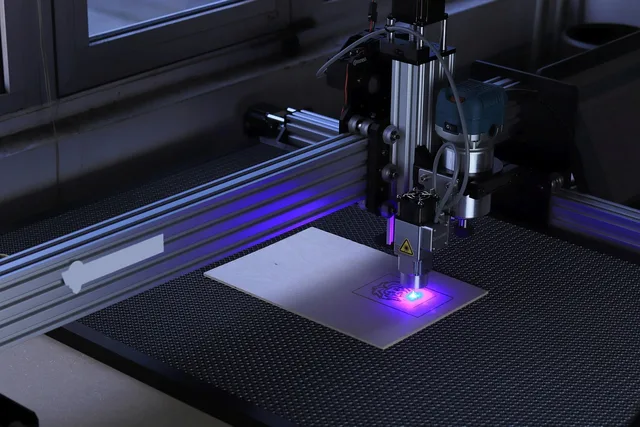
Cricut and Glowforge are not kit makers, but the two common cutting routes. Cricut machines typically cost $150 to $400 and handle card and thin basswood. Glowforge laser cutters start near $1,200 and cut plywood and acrylic cleanly. Either lets you re-cut a part you broke. Buy if you break parts often or want to change a design. Avoid if a knife and a steel rule already cover your builds.
Pre-purchase kit checks
- Scale stated as a ratio
- Cut file in SVG, DXF or PDF at 1:1
- Material named with thickness in mm
- Instructions show assembly order
- Spare parts or re-cut route offered
Scale decides your tools
At 1:12 a wall is 200 mm tall, and a door frame is chunky enough to clamp. At 1:24 the same wall is 100 mm and clamps become the problem. Small spring clamps, a self-healing mat and a fine razor saw cover both scales.
Tools and solvents by scale
1:12
- Wall height
- 200 mm
- Clamping
- chunky, clampable
- Tools
- spring clamps, mat, razor saw
- Solvent
- PVA for wood/card
1:24
- Wall height
- 100 mm
- Clamping
- clamps are the problem
- Tools
- spring clamps, mat, razor saw
- Solvent
- cyanoacrylate for quick joints
Solvent choice follows material. PVA for wood and card, cyanoacrylate for quick joints. No solvent work without the safety data sheet and your local ventilation requirements. OSHA hazard communication rules and the SDS tell you what the product contains.
Extras: lighting, plans and photos
Warm white LEDs at 2700 K to 3000 K read as household light in a room box. Cool white at 4000 K to 5000 K suits workshops and kitchens. Lumen output matters more than wattage at this size, and a 1:24 room needs very little of it.
LED colour temperature by room
Warm white
- Kelvin
- 2700-3000 K
- Reads as
- household light
- Best for
- room box
Cool white
- Kelvin
- 4000-5000 K
- Reads as
- workshop, kitchen
- Best for
- workshop, kitchen
Any 120 V work belongs to a licensed electrician working to the National Electrical Code. Battery and low-voltage LED strips avoid that entirely.
The capture settings that work for a prototype also work for a finished room. A high f-stop keeps the whole box sharp, a tripod removes handheld blur, and manual exposure stops the camera shifting between frames. The University of Illinois library's guide to capturing 3D objects gives the settings in full.
Capture settings for a finished kit
- 12-15frames per quarter view
- highf-stop for full sharpness
- tripodremoves handheld blur
- manualexposure stops frame shifting
Twelve to fifteen frames per quarter view is the working number. That is the difference between documenting a build and taking pictures.
Kit plans name book parts wrongly, which makes a book nook plan hard to follow. The University of North Carolina's Ullman Classics Library keeps a glossary of the parts of a book drawn from binding terminology.
Board is the general term for pasteboard, millboard and strawboard. The case is two boards, an inlay and covering material, made separately from the text block and attached at casing-in.
Lead times and asking a maker
Lead time depends on stock and on whether the maker cuts to order. Cutebee and Hands Craft sell from warehouse stock through retail listings. Greenleaf and Real Good Toys ship from their own US workshops. Small Etsy studios cut to order, so ask for a shipping estimate before you buy.
Small studios take commissions and answer questions about cut files. A small space setup for working with miniature kit makers covers the bench, storage and lighting side of that relationship.
If you would rather learn in person than buy, book nook projects, classes and studios lists what is running. For design ideas before you commit to a kit, makers themselves give the most useful miniature room ideas and advice.
Common questions
Are expensive kits actually better?
Usually in the shell, rarely in the instructions. Real Good Toys machines joints better than budget makers, but you still supply the clamps, the glue and the patience.
Which scale should a beginner start at?
1:12. Parts are large enough to handle, clamps fit, and mistakes are visible before they are permanent. Move to 1:24 once your bench habits are settled.
Can I cut my own parts instead of buying a kit?
Yes, if you have a vector file and a cutter. That is also the reason to check the cut file format before buying: a kit you can re-cut is a kit you can repair.
Do I need a laser cutter?
No. A craft knife, a steel rule and a cutting mat build most card and thin wood kits. A cutter earns its cost when you break parts often or want to modify the design.