Reviews
Part of A realistic take on miniature building, 2027 edition
Work surfaces for miniature building, and how to judge one, updated for 2027
What a miniature bench actually has to survive, why height matters more than area, how wood moves under a build, and lighting the work rather than the room.
What to take away
- A work surface has four jobsstay flat, take blade damage, resist glue and solvent, and sit at the right height.
- No products are ranked here, because we have not bought and used competing benches or mats. Ranking several of each and recording how they failed over months is the only honest way to do it, and the original headline promised exactly that.
- Height and reach cause more trouble over a year than surface material ever does.
- A solid wood top is not a fixed reference plane. It moves with the air in the room.
What the surface has to survive
Four demands, in the order they bite:
- Flatness, because a warped surface transfers its warp into anything glued flat against it.
- Blade tolerance, because you will cut on it whatever you intend.
- Chemical resistance, because glue, alcohol, acetone and thinned paint all get spilled.
- Cleanability, because dried glue nibs under a workpiece push it out of true.
A self-healing mat covers the middle two well and the first one badly, since mats take on the shape of whatever is beneath them. A sheet of tempered hardboard over a flat table covers the first, is cheap to replace, and accepts being ruined.
Mat thickness sets blade depth. On a typical 3 mm mat, about 1 to 2 mm of blade below the sheet is the limit before the cut grabs and tears. A 5 mm mat takes roughly 2 to 3 mm. Set the blade so one pass scores and two passes cut.
Named options, and their trade-offs:
- Tempered hardboard, typical 1/8 inch: flat if it starts flat, cheap, scars well, swells when soaked.
- HDPE, typical 1/2 inchglue pops off, but a knife point sinks in and it is too soft to be a gluing datum.
- Self-healing matsOLFA and Dahle both sell mats in the US, typically 3 mm and 5 mm thick. Recovery after a cut is good; flatness over a soft table is not.
- Glass, typical 1/4 inch plateflat and easy to scrape clean, but it dulls blades fast.
US providers for the generic materials include Home Depot and Lowe's for 1/8 in. tempered hardboard, and U.S. Plastic Corp. or ePlastics for 1/2 in. HDPE sheet. Ready-made surfaces include the Husky 52 in. 9-drawer mobile workbench, the Gladiator 4 ft. adjustable workbench, the Seville Classics UltraHD workbench, the Bora Centipede 4x4 work stand, and the Rockler T-Track table.
Height and reach matter more than area
Detailed work pulls people into a hunch: shoulders raised, neck forward, wrists on a hard edge for hours. NIOSH's overview of ergonomics and work-related musculoskeletal disorders ties these disorders to sudden or sustained force, vibration, repetitive motion or awkward postures, so the practical rule is to fit the bench to the person.
It recommends designing the work environment, including tools, lighting and equipment, to fit the person rather than the other way around.
Seated, the surface sits at elbow height, about 26 to 30 inches (66 to 76 cm) from the floor. For fine work, drop the work 2 to 4 inches (5 to 10 cm) below elbow height so the wrists stay straight. Keep the part within about 18 inches (46 cm) of your chest.
For ready-made benches, typical fixed workbench height is 34 to 36 inches (86 to 91 cm). Typical adjustable workbenches cover about 28 to 42 inches (71 to 107 cm). Measure the top with the casters or feet set as you will use them.
Bench ergonomics fixes
- Raise work on box or turntable
- Support forearms, not wrists
- Stand up on a timer
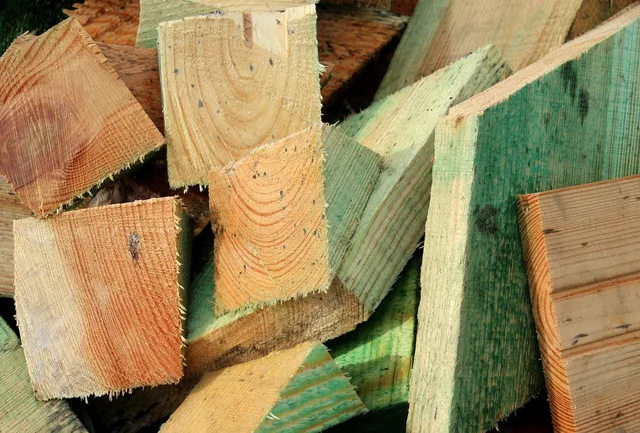
Wood moves, and a bench top is wood
Treating a wooden top as a fixed plane is a mistake. It shows up months later as a twisted room box.
Ohio State University Extension's guidance on using local woodlot lumber notes physical and mechanical properties vary widely between species, so no wood top is a fixed reference plane. Within a species, age, growth rate and site matter too.
Wood destined for a dry, heated environment needs kiln drying, or a spell drying in similar conditions first. Air drying alone can take several years to reach 15 to 20 percent moisture content, depending on thickness and species.
The practical version: let new stock sit in the room for a week before you build with it, keep a flat reference board that lives indoors, and check a glued frame against that board rather than against the bench.
Set the glued frame on the reference board and press each corner in turn. Sight along each joint from the end at eye level.
For a 6 inch room box frame, a typical tolerance is a gap under 1/32 inch (0.8 mm) at every corner. Past 1/16 inch (1.5 mm) the clamps have to force the joint, and forcing it cracks it.
Light the work, not the room
A ceiling fixture behind you puts your own shadow on the part you are cutting. One lamp on one side gives a hard-edged shadow that hides detail. Two smaller lights at different angles, low and close, shows a surface honestly and tells you whether paint has covered.
The tools that live on this surface are covered in the beginner tool kit, and what happens to materials when the bench is packed away is covered in how to store materials.