Maintenance
Part of A realistic take on miniature building, 2027 edition
5 things to weigh up on miniature building mistakes
Miniature building mistakes beginners make at home: the errors that show up in almost every first build, too much glue, paint at full strength.
What to take away
- Almost every visible beginner error is a thickness error, a glue error or a paint dilution error.
- Adhesives are not permanent. They yellow, creep and let go on different schedules depending on type.
- Drying and curing are different things, and rushing the second one undoes the first.
- Rags used with oil finishes can start a fire on their own if you leave them in a pile.
Too much glue, and the wrong glue
The first thing that gives a beginner build away is a bead of glue where a joint should be. The correct amount is less than looks reasonable: a smear on one face, pressed until it squeezes almost nothing.
The reason is mechanical, not cosmetic. Purdue Extension's survey of wood adhesives notes white glues set by losing their dispersing solvent, not by cross-linking. That leaves them reversible and softenable by heat.
Dry strength is high, but thick glue lines creep under sustained loads. A fat glue line is the weak joint, not the strong one.
Choice compounds it: cyanoacrylate on porous card soaks in and holds nothing, and hot melt leaves a fillet larger than the part.
Paint at full strength
Craft acrylic straight from the bottle is roughly three times too thick for this work. It fills the corner of a molding, rounds off a plank line and buries texture you spent an evening scribing. Thin it until it looks too thin, then build three coats. The test: if one coat covers completely, it was too thick.
Building at real-world thickness
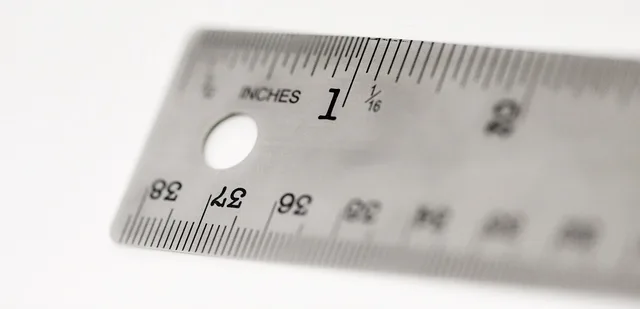
Beginners routinely use half-inch foam board for a wall that should read as a quarter of that, and the eye notices immediately even when nobody can say why. A few real dimensions, already divided by twelve:
- Interior wall, about five inches through
- a little under half an inch.
- Floorboard, three quarters of an inch thick
- about one sixteenth.
- Table top, one and a half inches thick
- an eighth of an inch.
- Window sill, one inch at the nose
- a twelfth of an inch.
Measure something real and divide, rather than choosing stock and hoping.
Working faster than the glue
Drying is solvent leaving. Curing is the adhesive reaching strength. White glue feels dry in twenty minutes and is not at full strength for a day. Air-dry clay skins over long before its core is hard, and sanding it early tears the surface.
The fix is a queue: keep two or three subassemblies going, so there is always something to work on that is not the thing you should be leaving alone. Stock that behaves predictably helps too, which is the subject of how to choose materials.
Rags, oil finishes and the fire nobody expects
This is the mistake that stops being cosmetic. The Massachusetts Department of Fire Services warns that the oils in some paints, stains and varnishes release heat as they dry. It also warns that if oily rags and applicators are left in a pile, a box or the trash, that heat stays trapped and can start a fire.
Its advice is to hang them outside to dry, or spread them flat and weighted so they are not piled. Frequent users should use a listed oily waste container. Occasional users should store dry rags in a small airtight non-combustible container with a tight lid, such as an old paint can, covered with water and an oil breakdown detergent.
A single stained miniature floor produces exactly this waste. Where those rags end up while the build dries is a decision about the bench itself.