Reviews
Part of A realistic take on miniature building, 2027 edition
How to choose materials for miniature building: a closer look
How to choose materials for miniature building: choosing stock by the job it has to do, sheet goods under paint, what hardwood really means, formaldehyde in a small.
What to take away
- Choose stock by what it has to do next, not by what it looks like on the shelf.
- Hardwood and softwood are botanical categories. They tell you almost nothing about how the wood cuts.
- Composite sheet goods sold in the U.S. carry a formaldehyde compliance label, which is worth reading before you cut them indoors.
- Every material has a finish it likes. Deciding paint last is how good structure ends up looking wrong.
Start from the job, not the shelf
Before buying anything, write down what the piece has to survive. Will it be cut with a knife or a saw? Does it need to hold a screw, take a wash of thinned paint, bend around a curve, or stay flat under glue on one face only? Those four questions eliminate most of what is on the shelf.
What must the piece survive?
Cut with knife or saw?
pick scoreable or sawable stock
move to next question
The habit worth building is asking what fails first. A material rarely fails because it was cheap. It fails because it was asked to do something a different material does easily.
Sheet goods and what they do under paint
Sheet goods under paint
Material
- Mat board
- Cleanly
- Foam board
- Light, rigid
- Chipboard
- Dense, flat
- Thin plywood
- Holds edge
- Stirene
- Score-and-snap
Cuts
- Mat board
- Swells, buckles
- Foam board
- Solvent melts core
- Chipboard
- Thirsty, seal first
- Thin plywood
- Veneer chips
- Stirene
- No swell
Paint behavior
- Mat board
- Foam board
- Chipboard
- Thin plywood
- Stirene
- Mat board cuts cleanly and takes texture well, but swells and buckles if you soak one side.
- Foam board is light and rigid until solvent touches it, at which point the core melts away under the paper.
- Chipboard and grayboard are dense, flat and thirsty. Seal them or they drink two coats before any color appears.
- Thin plywood holds an edge and a screw, but the face veneer chips if you cut against the grain.
- Stirene takes a knife score-and-snap and does not swell at all, though glue for it is solvent, not water.
Hardwood, softwood, and actual hardness
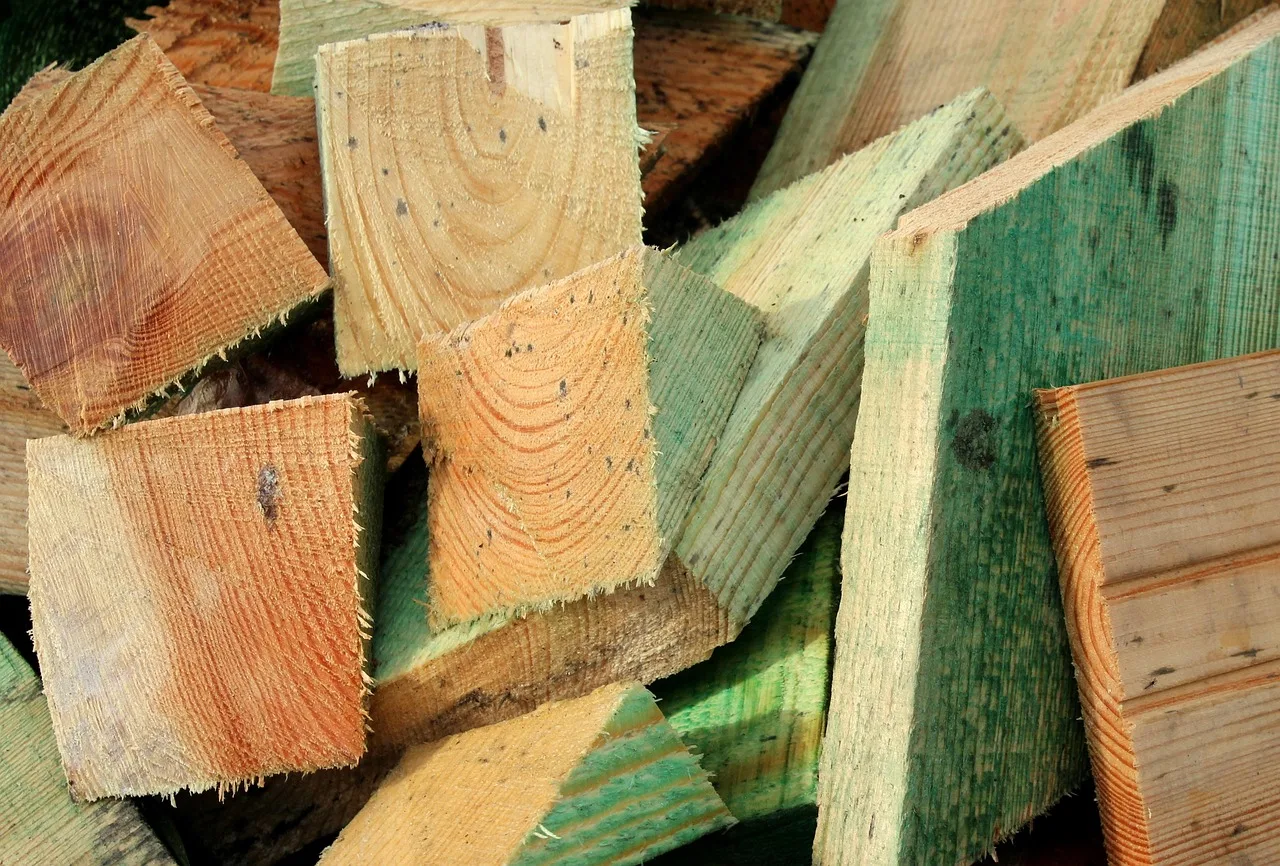
The words mislead almost everyone. Penn State Extension's explanation of hardwood against hard wood notes that hardwood and softwood name tree categories, angiosperm and gymnosperm. They have little to do with the wood's hardness.
Hardness is measured separately: the load needed to embed an 11.28-millimeter steel ball to half its diameter, usually reported in newtons.
That matters at this scale because the wood most people cut for miniatures is a hardwood that behaves like a soft one. It carves with a knife, takes crisp corners, and sands to a smooth face without tearing. Pick by how it cuts, then check the label second.
Formaldehyde, and a small closed room
Plywood, medium-density fiberboard, and particleboard are bonded with resins. EPA's rule on formaldehyde emission standards for composite wood products operates under TSCA Title VI, codified at 40 CFR Part 770.
Since 22 March 2019, composite wood products sold or imported in the United States must be labeled as TSCA Title VI compliant. The rule covers hardwood plywood, MDF, particleboard, and finished goods containing them.
For a builder this is a purchasing check rather than a legal one. Buy labeled stock, and cut and sand MDF outside or at an open window, because the dust is fine, persistent and unpleasant in a bedroom-sized volume of air.
Matching material to finish
Decide the finish before the structure, not after. Water-based acrylics raise the grain on bare wood and buckle unsealed card. Solvent-based sprays attack foam. Chalk pastel needs tooth, so a glossy sealed surface will not hold it. Alcohol inks flood into porous board and stop being controllable.
The safe order is: choose the finish, choose a material the finish behaves on, then seal it once and test on an offcut. Skipping that test is a recurring theme in mistakes beginners make at home. If you are still working out what scale you are building to, the wider starting guide covers that first.