Industry
Part of Miniature room ideas: the ones with staying power, 2027 edition
Proportion and restraint: what miniature room ideas actually demand
The demands a room box makes on a maker: proportion, restraint, a decade to build in, and the environment the finished piece has to survive on a shelf.
What to take away
- We quote one documented maker source below. We have not interviewed anyone, and invented quotes are worse than none.
- Proportion is the skill that separates convincing rooms from careful ones, and it is learned by measuring real rooms.
- Real interiors are bigger than people build them. Check a dimension before trusting your instinct.
- The environment a finished piece lives in matters more than the paint you finished it with.
What to buy first
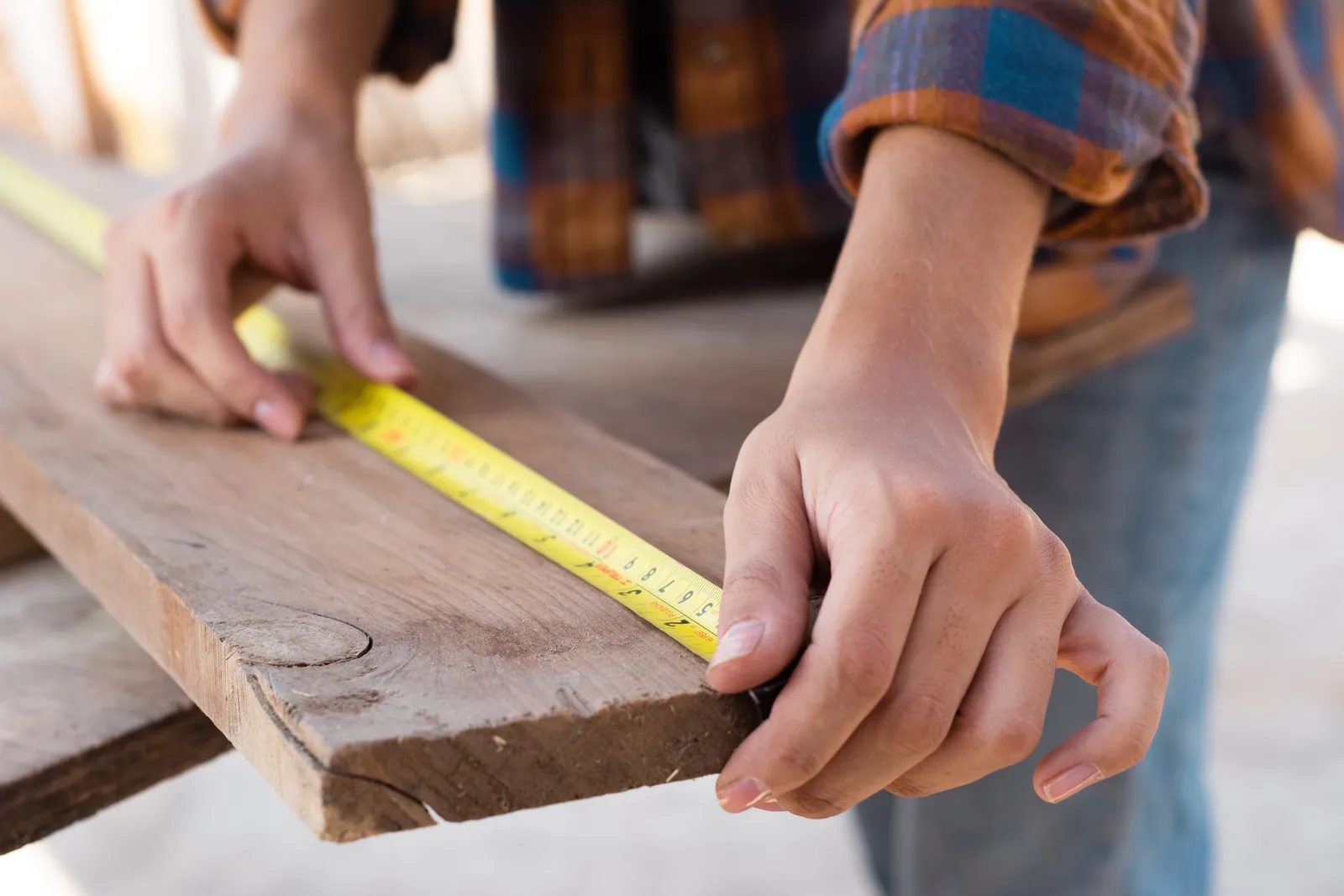
For a 1:12 scale room box, start with a cutting mat, a hobby knife with spare blades, and a steel ruler. Typical costs: mat $15 to $30, knife $8 to $15, ruler $5 to $10.
White glue and a glue syringe cost $5 to $12. Skip pre-made furniture sets at first. They cost $20 to $50 per piece and limit what you learn. Buy a sheet of 3mm foam board or basswood instead, about $5 to $10.
Proportion is the skill
Almost every room box that looks wrong is out of proportion, and almost every maker who improves quickly starts measuring real things. Rooms are larger than intuition suggests, and the mistake compounds: a room built too small gets furniture built too small to fill it, and then nothing has any air around it.
Grand dining room: real vs. built
Vanderbilt dining room
- Length
- 50 feet
- Width
- 30 feet
- At 1 inch = 1 foot
- 50 inches
- Result
- Air around furniture
Typical room box
- Length
- 18 inches
- Width
- —
- At 1 inch = 1 foot
- 18 inches
- Result
- Feels like a corridor
The National Park Service's description of the rooms and furnishings at Vanderbilt Mansion notes the dining room is 50 feet long.
At one inch to the foot, that is a box 50 inches long.
Most people building a grand dining room build it at 18 inches and wonder why it feels like a corridor.
A worked example: a 1:12 scale study. The room box is 16 inches wide, 12 inches deep, and 9 inches high.
Props: a desk 5 inches wide, a chair 2 inches wide, a bookcase 3 inches wide, a rug 8 by 6 inches, and a floor lamp 5 inches tall. That leaves 6 inches of open floor in front of the desk.
The Art Institute of Chicago, which holds the Thorne Miniature Rooms, describes Narcissa Niblack Thorne's work as a record of historical interiors.
Restraint, and the decade rule
The decade rule: choose one decade and reject every object, color and material that does not belong to it.
Two habits show up in work that reads well. The first is subtraction: build the room, then remove a third of the objects. The second is applying the decade rule, because mismatched periods are the most common invisible error.
A useful discipline is to answer four questions in writing before starting:
Four questions before you start
- Who uses this room, and their living?
- What were they doing five minutes ago?
- What year is it, ruling out anachronisms?
- Where is the light coming from, is it on?
- What decade is this room?
- Who lives here?
- What is the one thing they would never throw away?
- What is the light source?
Every prop decision then answers to those four lines instead of to whatever is in the parts box.
Choosing a subject: pick a room you have stood in and remember, or a technique you want to try. A style follows from that. A 1930s kitchen, a 1970s study, a Victorian parlor. The decade rule then keeps the objects consistent.
The environment the piece will live in
A room box has to survive on a shelf for years. The conditions around it do most of the damage, a well-trodden point in collections care.
The Getty Conservation Institute's project on environmental guidelines for collections ran from 1999 to 2002. It helped revise Chapter 20 of the ASHRAE applications handbook, the chapter for museums, libraries and archives, on temperature, relative humidity and system selection.
You are not running a museum. The lesson transfers: the display environment is a design decision, not an afterthought. A piece in a stable interior room will outlast the same piece on a sunny windowsill by decades, whatever it is made of.
Where to keep materials before they become a piece is covered in storing supplies, and what to build first is in ten room ideas.
![At left, 2 women (Katherine L. Howes[?] and Mrs. Franklin A.[?] Howe, Jr.) stand in front of Sir Nevile Wilkinson's "Titania's Palace." Both women face toward Sir Wilkinson at right. Sir Wilkinson stands in profile, facing left. He leans forward and slightly onto the table supporting the miniature p. Miniature room ideas: the ones with staying power, 2027 edition](/covers/miniature-room-ideas-in-2027-10-to-consider-640.webp?v=13966214)