Guides
Part of Miniature room ideas: the ones with staying power, 2027 edition
Practicing miniature room skills on scrap before the real build
A two-day plan that trades a finished room for practiced skills: test panels, paint failures worth causing on purpose, and a bench setup that survives ten hours.
What to take away
- Spend the weekend making test panels, not a room. Panels teach faster because you can ruin them.
- Cause the common paint failures deliberately once, so you recognize them when they happen by accident.
- Set the bench up for ten hours of work, not for one, or the second day will be worse than the first.
- Finish the weekend with a labeled reference board you will use for years.
Saturday morning: cutting and squaring
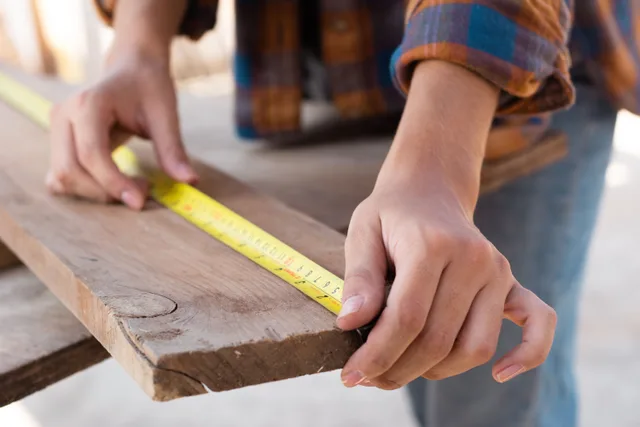
Cut twenty identical rectangles from card and thin plywood. Do not cut carefully. The goal is to find where your cuts drift. That is almost always at the far end of a stroke and where you shift your grip.
Then cut ten more, checking each against a square. Stop when eight in a row are true. This is dull, and it is the exercise that most improves a first room box.
Saturday afternoon: finishes on scrap
Prime and paint the panels in pairs, changing exactly one thing between them: thinned against unthinned, one coat against three, sealed against bare, brushed against stippled.
While you are at it, cause a failure on purpose. Purdue Extension's bulletin on paint failure problems explains temperature blisters.
They appear in the paint film's surface as early as a few hours or as long as one to two days after painting. A dry skin sets over fresh paint, and the thinner underneath turns to vapor with nowhere to go.
Dark colors, which absorb heat, and thick coats are more likely to blister than white paints or thin ones. The bulletin also describes cross-grain cracking, which happens when coatings get too thick, and notes that once it appears the only fix is to remove the paint completely.
Paint one panel thick, in a dark color, in the sun. Watch what happens. You will never wonder about that texture again.
Sunday morning: one wall, start to finish
Build a single wall with a window opening, a sill, a skirting and a wall treatment. One wall, done to a standard you are pleased with, teaches more than four walls done quickly.
Take it through the whole sequence and time each stage:
Sunday morning: one wall
- Cut and dry fit, then adjust until the joint closes with no pressure.
- Glue, fill and sand, leaving the fill longer than feels necessary.
- Prime, then paint in thin coats.
- Weather, glaze the window, and fit the sill last.
Write down what each stage actually took. The estimate in your head is wrong, and this is how you correct it.
Setting the bench up to last two days
Ten hours of close work punishes a bad setup. UW-Madison's ergonomics guidance gives numbers you can apply directly. Set seat height so feet rest flat and knees sit at or slightly below hip level, hips and knees around ninety degrees.
Leave two to four fingers' width between the seat edge and the back of the knee, and set the work surface at about elbow height when your arms rest at your sides. The guidance also advises changing position every twenty to thirty minutes, even a good position, and adding movement.
Raise the work rather than lowering your head. A box under the build costs nothing and saves your neck on the second day.
Finish with a reference board
Glue every test panel to one card, labeled with the paint, dilution, number of coats, sealer, and drying time. That board answers questions for years and is the only artifact from the weekend worth keeping.
Which materials to run these tests on is covered in choosing materials, and what to build once the practice is done is in ten room ideas.
![At left, 2 women (Katherine L. Howes[?] and Mrs. Franklin A.[?] Howe, Jr.) stand in front of Sir Nevile Wilkinson's "Titania's Palace." Both women face toward Sir Wilkinson at right. Sir Wilkinson stands in profile, facing left. He leans forward and slightly onto the table supporting the miniature p. Miniature room ideas: the ones with staying power, 2027 edition](/covers/miniature-room-ideas-in-2027-10-to-consider-640.webp?v=13966214)