Reviews
Part of How to Categorize Miniature Build Costs
4 workbench realities for miniature projects
Not a miniature project costs comparison: four workbench realities for miniature projects, from sacrificial tops and posture to wood movement and priorities.
What to take away
- No benches or mats are ranked herethis is not a miniature project costs comparison, and we have not bought competing ones and worn them out.
- A sacrificial top you replace cheaply beats an expensive surface you protect.
- Posture is a real cost, paid later, and the fixes are free or nearly free.
- A wooden bench top has to settle in the room before it can be trusted as a flat reference.
1. Sacrificial tops beat precious ones
The cheapest surface strategy is a good table you never cut on and a replaceable sheet you do. Tempered hardboard, cut to the table size, is the usual answer. It lies flat, takes a blade, and when it stops being flat you replace it for very little.
The alternative is an expensive surface you then protect with layers of paper and card. That adds the cost of the surface plus the annoyance of the protection plus a working height that keeps changing.
Self-healing mats sit between the two. They are excellent for cutting and poor as a flatness reference, since a mat takes the shape of whatever is underneath it.
2. The cost of posture, paid in year two
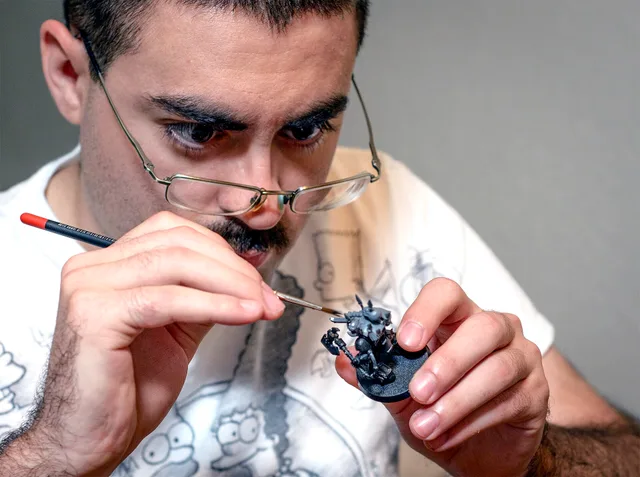
Close bench work is a posture problem before it is anything else, and the fixes cost nothing. Cornell's laboratory safety guidance on bench ergonomics describes this class of work. Looking through microscopes and looking down at bench tasks combines repetitive movement with sustained awkward posture. A lack of leg room under a counter leads to more leaning and reaching.
Raise, tilt, or move work closer to the edge instead of bending your neck, and avoid leaning on hard table edges. Pad the front lip or use forearm pads.
Take short rest breaks of one to two minutes every twenty minutes, and get up to stretch every forty-five to sixty. Take a vision break every twenty minutes by closing your eyes or focusing on something distant.
Cornell also notes that slightly snug gloves reduce hand forces and improve accuracy in fine manipulation, while loose gloves make handling small parts more forceful. None of that is a purchase. All of it is the difference between a hobby you still enjoy in year two and one that gives you a sore neck.
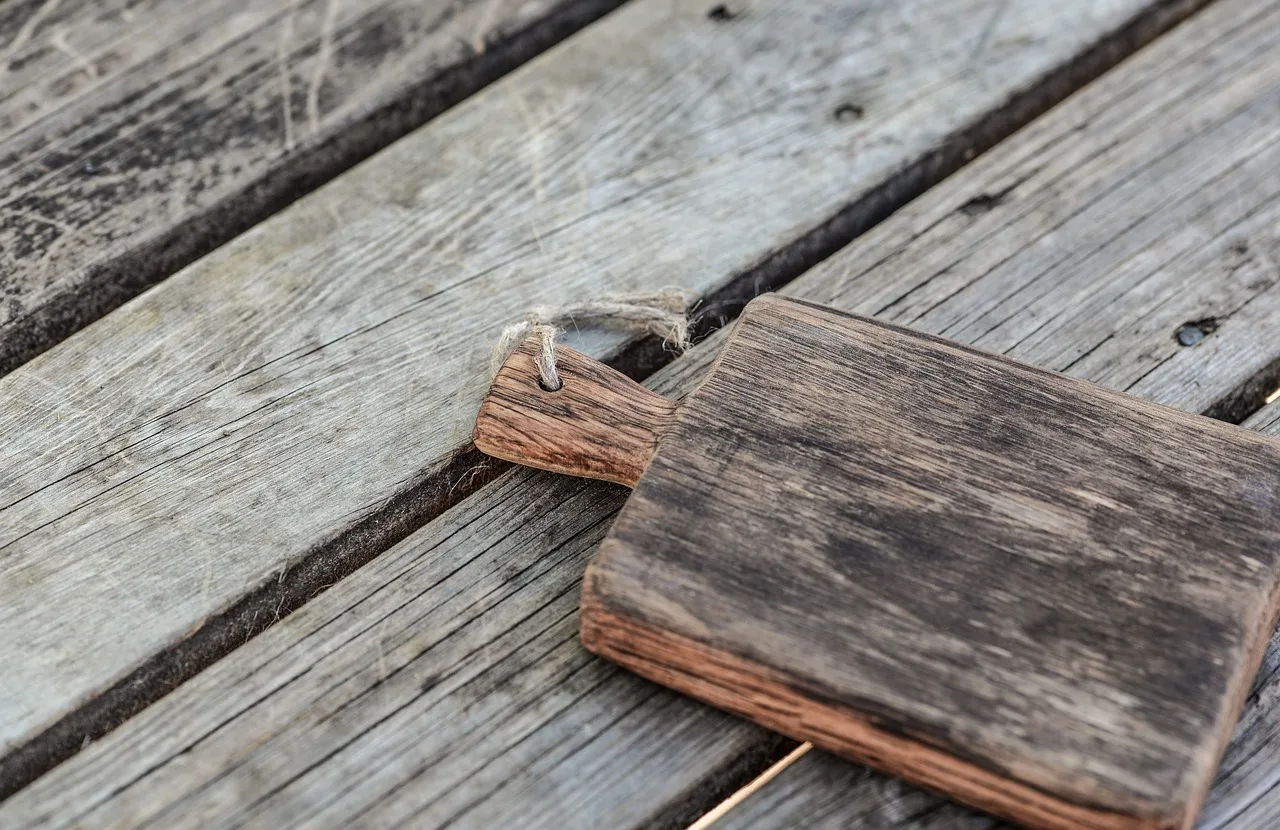
3. A bench top is wood, and wood settles
Treating a new top as flat on day one is optimistic. Ohio State Extension's overview of drying hardwood lumber notes that wood furniture in a home reaches equilibrium with the air at 6 to 8 percent moisture content. Fiber saturation point is 28 to 30 percent in most species; shrinkage begins below that.
Drying too fast causes surface and end checks, honeycomb inside the board, and casehardening.
At a bench that means letting a new top sit in the room for a couple of weeks before you rely on it. Keep one small piece of flat stock indoors permanently as a reference to check work against. That reference costs nothing and catches a twisted assembly before glue sets.
4. What actually deserves the money
- A stable table at the right height, which can be secondhand.
- A replaceable sacrificial sheet, bought in twos.
- A chair that adjusts, which is the one item worth paying for.
- Two small lights rather than one big one.
- A box that gets everything off the surface in one movement.
The judging criteria for the surface itself are in work surfaces and how to judge one, and how to test whether any purchase pays for itself is in costing a tool kit.