Reviews
4 things the tiny scene case studies teach
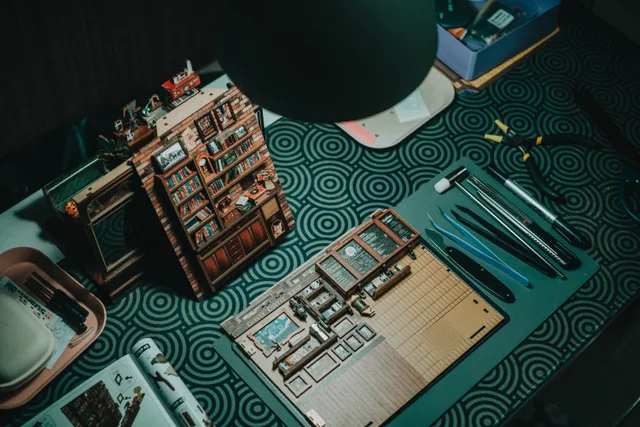
The small kit that turns a build into a record: a fixed camera position, consistent light, a notebook that survives glue, and paper that will still be legible later.
What to take away
- Documentation needs four things: a fixed camera position, consistent light, a place to write, and a scale reference.
- Light that changes between sessions makes a photo set useless for comparison.
- Ordinary wood pulp paper yellows and goes brittle. What you write plans on decides whether they survive.
- No brands or prices appear here. We have not bought and compared competing gear.
The four things
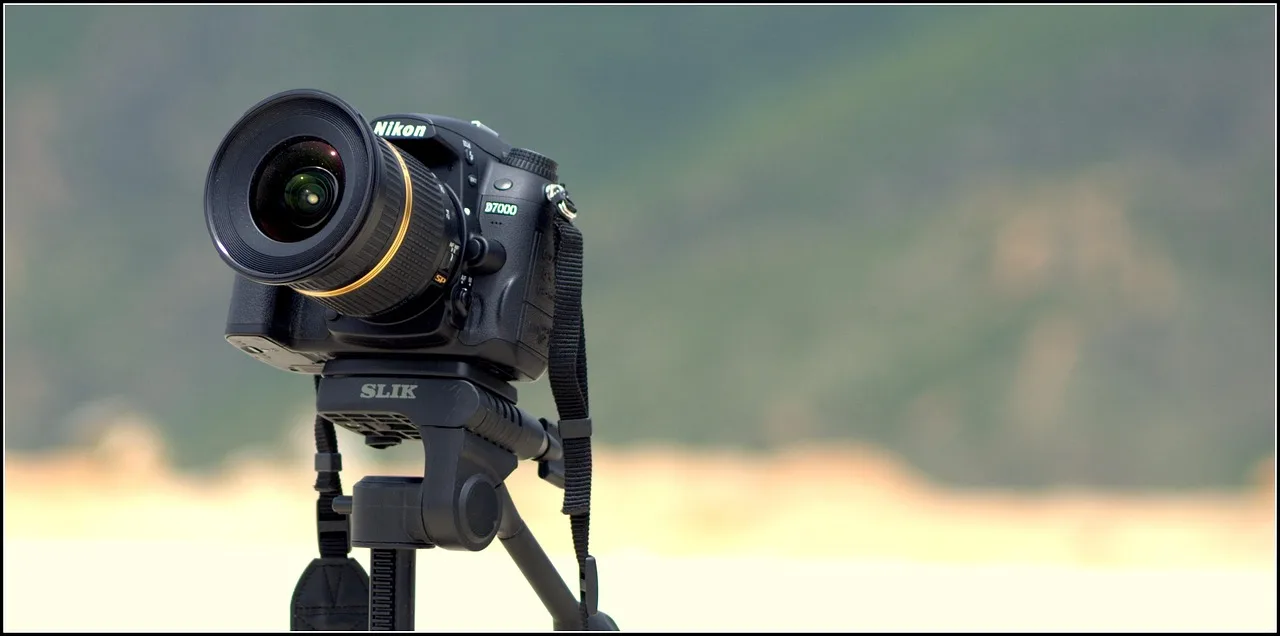
- A camera position you can return totripod marks on the floor, or a bracket on a shelf.
- A light rig that does not changetwo fixed lamps, same bulbs, same positions.
- A notebook or a phone note that survives the bench, updated the same day.
- A scale reference in one frame per session, ideally an everyday object rather than a ruler.
Everything else is optional. A phone on a fixed mount under two consistent lamps produces a better record than an expensive camera used from a different angle each time.
Four things for a build record
- Camera position you can return to
- Light rig that does not change
- Notebook that survives the bench
- Scale reference in one frame
Consistent light, and what to buy for it
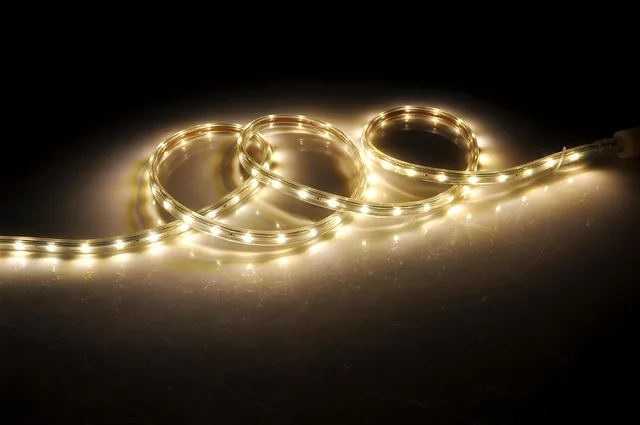
Light is the variable that most often ruins a build set, because the room changes across a project and automatic settings chase it. Choosing bulbs deliberately fixes it.
Bulb specs to shop by
Old watts
- 60 W
- 800
- 75 W
- 1100
- 100 W
- 1600
Lumens
- 60 W
- 9-12
- 75 W
- —
- 100 W
- —
LED watts
- 60 W
- 75 W
- 100 W
University of Maryland Extension's guide to home lighting gives the numbers to shop by. Buy by lumens, not watts: 800 lumens is roughly an old 60 watt bulb, 1100 a 75 watt, 1600 a 100 watt. An 800 lumen LED replaces a 60 watt incandescent at about 9 to 12 watts.
It wants a color rendering index of 80 or above for general use. For color accuracy, it wants 90 or above.
Its correlated color temperature bands are 2700 to 3000 K for warm rooms, 3500 to 4000 K for neutral work areas, and 5000 K and up for task and garage lighting.
The Lighting Facts label lists brightness, energy used, life, color temperature and estimated yearly cost.
For documentation that gives a clean specification. Two identical bulbs, high color rendering, neutral color temperature, and never changed mid-project.
Paper that lasts
If you keep plans, cut lists and notes on paper, the paper matters more than you expect. The University of Illinois preservation program's page on support materials for technical drawings explains why.
Rag paper has longer fibers and holds up better over time. Machine pulping gives wood pulp paper short weak fibers, weakened further by sizing agents such as alum-rosin.
Alum-rosin sizing, lignin and residual processing chemicals make wood pulp paper from 1850 through the 1980s yellow and turn extremely brittle quickly. Light or heat speeds that up.
The page also records the correction: the acidity was widely recognized as early as the 1930s and has been improved, so most papers and sizings are now chemically neutral or alkaline.
That comes down to one choice. Ordinary printer paper is fine for a working cut list and poor for a plan you want in ten years. Acid-free stock costs slightly more and is the difference.
What not to buy
A better camera, a light meter, or a colorimeter. None of them fixes the actual problem, which is inconsistency between sessions. The method these tools serve is in running a case study on your own build, and the photography technique itself is in photographing a kit build.