Industry
Miniature kit makers companies: fit, instructions and battery safety
Miniature kit makers companies such as Rolife/Robotime, Cutebee and Hands Craft: practical notes on fit, instructions and battery safety.
What to take away
- This overview names miniature kit makers and focuses on repeatable fit, usable instructions, and battery safety.
- A miniature kit is a tolerance problem before it is a design problem: parts have to fit in somebody else's hands.
- Instructions are part of the product, especially when a builder must identify small parts and assemble them in order.
- Putting a coin cell in the box brings a specific federal standard with it.
Examples of miniature kit makers
Examples include Robotime, whose Rolife brand sells the Sakura Densya book nook; Cutebee, which sells book nook kits; and Hands Craft, which sells miniature house kits. These examples identify makers and kits, not a ranking of their products.
Design, manufacture, and retail are usually three different parties. Understanding those roles matters because a kit's design, production, and sale may not be handled by the same company.
For any miniature kit, check whether its parts seat without forcing, whether the instructions identify each part and its orientation, and whether any included lighting brings battery requirements with it. A maker's name alone does not establish how well a particular kit fits or how clear its instructions are.
Cutting to a tolerance somebody else has to live with
Making one of something is design. Making fifty identical ones that fit together in a stranger's hands is manufacturing, and the difference is measurement.
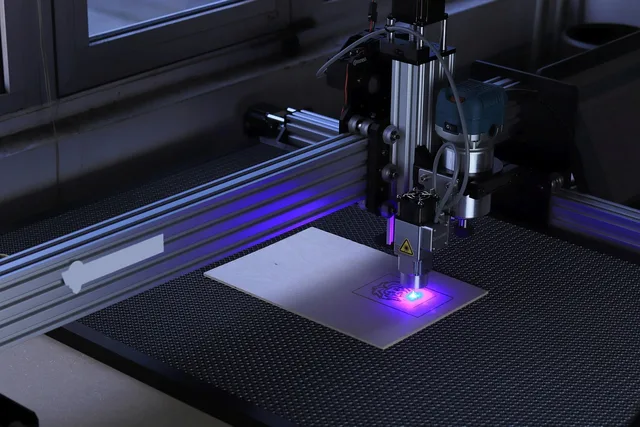
Miniature kits may use laser-cut plywood, MDF, or acrylic. Because tab-and-slot joints depend on material thickness, measure the actual stock instead of assuming every sheet matches the design file. NIST's material on metrological traceability explains calibration and measurement references; the practical lesson for a small workshop is to use a consistent tool and reference.
A digital caliper, steel ruler, and square can help check miniature parts and their edges. If your ruler, your drawing, and the machine that cuts the parts do not all agree, the kit will not fit, and the customer may conclude they are bad at building. Measure the cut parts rather than trusting the file, and check against the same reference every time. If a kit is designed for a stated scale, keep its pieces consistent with that scale.
The instructions are the product
For a miniature kit, instructions need a numbered parts inventory, a stated build order, and clear views that show which face of each small part is which. Identify glue surfaces and warn the builder when a step is irreversible.
Write instructions by building the kit from them, not by describing what you did. Those are different documents, and only the first one works for someone who has never seen the design.
Battery safety for illuminated miniatures
Small LEDs can bring illumination to a book nook or miniature scene, and a kit that includes a button or coin cell must account for the applicable safety requirements. CPSC's button cell and coin battery business guidance notes Reese's Law was enacted in 2022. The Commission incorporated ANSI/UL 4200A-2023 by reference as the mandatory safety standard, and the requirements are codified at 16 CFR part 1263.
They apply to consumer products manufactured or imported on or after 23 October 2023.
Two of its requirements are design constraints, not paperwork. Battery compartments holding replaceable button or coin cells must be secured so opening them requires a tool or two independent, simultaneous hand movements. A screw-secured battery door that requires a tool is one design example, but the finished product must still meet applicable access and testing requirements. Batteries must not be accessed or freed during use and abuse testing.
Warnings are required on the packaging, on the product where practicable, and in the instructions.
What the job actually contains
- Design and prototype, at least twice.
- Cut file preparation and test cutting, with measurement of the results.
- Instructions, written by building from them.
- Packaging that survives shipping and lets a buyer count the parts.
- Support, because parts go missing and people write in.
A buyer can check value and fit by looking at the material, how parts join, and whether the instructions make the build clear. For related context on how solo practices are organized, see how independent makers work.
Common questions
How many prototypes does a kit need?
Should a kit include glue and paint?
Is laser cutting necessary?
What is the most common production defect?
In this guide
- Miniature kit makers, reviewed against real useSix miniature kit makers and the tools they sell, judged on cut consistency, published tolerances and how their parts hold up in dry winter air.
- Costing sheet yield and wastage behind a miniature kit runPricing the supplies behind a miniature kit: costing a kit run, sheet yield and nesting, the wastage that humidity causes, packaging and postage.
- Zoning a spare room for small-batch miniature kit makingRunning short kit batches from a spare room: separating cutting, packing and storage, controlling repeated skin contact with adhesives, and workshop fire basics.
- An honest review of miniature kit makersNamed miniature kit makers reviewed on what they publish, who they suit and where they fall short, plus the checks that separate a good kit from a pretty box.
- 4 things worth knowing about miniature kit makersPhotographing a kit you made, for the people who will buy it: product photography for a kit run, showing what is in the box, close-up depth of field.