Guides
Part of Miniature kit makers companies: fit, instructions and battery safety
Zoning a spare room for small-batch miniature kit making
Running short kit batches from a spare room: separating cutting, packing and storage, controlling repeated skin contact with adhesives, and workshop fire basics.
What to take away
- Batch work needs three separate zones, not a bigger benchcutting, packing, and finished stock.
- Repetition changes the risk profile. What is harmless once a month is different done fifty times in an evening.
- Skin contact with adhesives is the exposure that creeps up on small producers.
- Sheet stock, solvents and packaging in one room is a fire question worth thinking about once.
Three zones, not more space
A one-off build needs one surface. A batch needs a route. Parts move from cut, to sort, to count, to bag, to box, and if those steps share a surface the run stalls every time you switch.
Batch route through three zones
- Cut at cutting surface
- Sort at packing table
- Count at packing table
- Bag at packing table
- Box at packing table
- Store on shelving
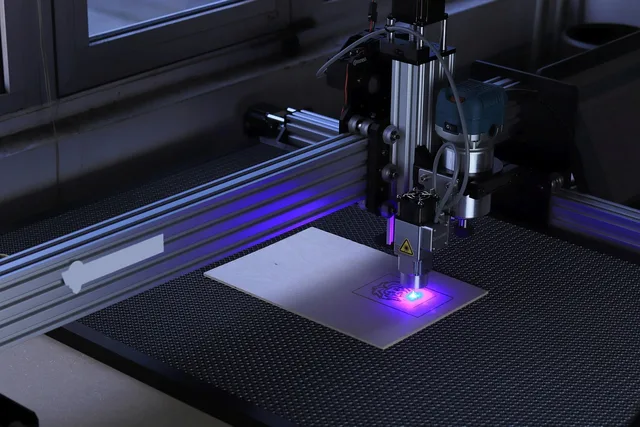
The minimum viable version in a spare room is a cutting surface, a folding table for packing, and shelving for finished stock and sheet material. Keep the packing table clean enough to work on paper. Anything with glue on it does not belong there.
Repetition changes the exposure
The thing that separates batch work from hobby work is repetition. Handling one glued part is nothing; handling two hundred is a different exposure, and adhesives are the usual culprit.
NIOSH control order for adhesives
- Eliminate the compound causing the condition
- Substitute a less hazardous compound
- Use local exhaust ventilation
- Isolate the process
- Wear gloves, glasses, shop coat, boots
NIOSH's recommendations for preventing skin disease set out the order of preference. Eliminating the compound that causes the condition is the most effective control, and substitution to a less hazardous compound comes next. The engineering examples given are local exhaust ventilation and isolation.
Personal protective equipment is named for activities including contact with solvents, contact with epoxy resin monomers, and contact with tacky surfaces or hardening agents such as glue or epoxy resins. NIOSH lists gloves, safety glasses or goggles, shop coats or coveralls and boots.
At batch scale the practical version is dull and effective. Buy gloves in a box rather than a pair. Choose the water-based product where one exists. And set the run up so you are not holding wet parts, because a jig that holds them is both faster and cleaner.
Fire, thought about once
A room containing sheet stock, packaging, solvent and a heat source deserves five minutes of planning. Illinois Extension's fire safety guidance is written for farms, and its housekeeping and electrical points are general.
Its first prevention item is having ABC fire extinguishers on hand. It also advises keeping areas clear of debris and maintaining pathways to exits, and keeping flammable products such as fuels away from ignition sources. Use equipment such as space heaters only while someone is present, and use extension cords on a temporary basis rather than permanently.
It also recommends developing a fire safety plan identifying exit routes before an incident occurs. In a spare bedroom full of cardboard and thin wood, that is a reasonable afternoon's thinking, and the extinguisher is the cheapest item in the room.
Storage that does not sprawl
- Sheet stock flat and off the floor, in one place, by thickness.
- Cut parts in numbered bags as soon as they leave the cutter.
- Packaging materials collapsed, since they otherwise consume the room.
- Finished stock in the same box size, stacked, with a count on each.
- Solvents and adhesives in a closed metal or lidded container, away from the heater.
The general small-room approach for a single build is in working in a small space, and how the whole production job breaks down is in what it takes to make a kit.